Introduction:
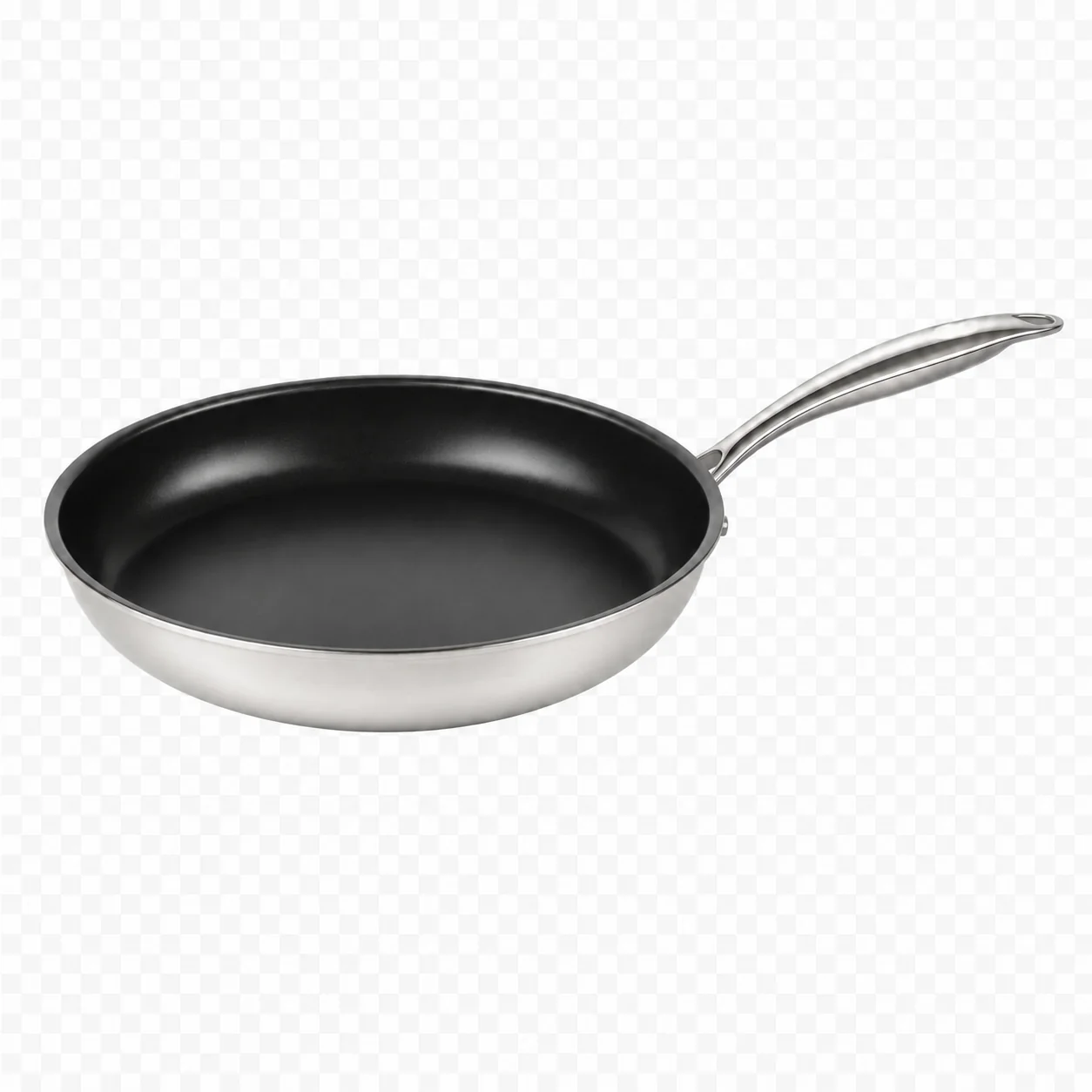
In today’s global cookware market, “Titanium” has become synonymous with premium quality, wellness, and aerospace technology. From $20 “nano-titanium non-stick skillets” to $80 “plasma titanium deep fry pans” and luxury $300+ “pure titanium wellness cookware,” manufacturers aggressively promote their products as “100% non-toxic, ultra-durable, and permanently non-stick.”
Yet, many consumers find that the expensive “titanium pan” they purchased still sticks or begins peeling after just a few months. Why does this happen? Is “titanium” in cookware a genuine metallurgical breakthrough, or is it frequently leveraged as promotional wordplay?
Written from an objective engineering, food contact safety, and real-world culinary perspective—and backed by verifiable third-party laboratory data (FDA 21 CFR, German LFGB, TÜV Rheinland, and Intertek compliance certifications)—this guide deconstructs the truth behind the primary “titanium” cookware categories, empowering buyers to bypass marketing gimmicks and invest in truly durable, high-performance cookware.
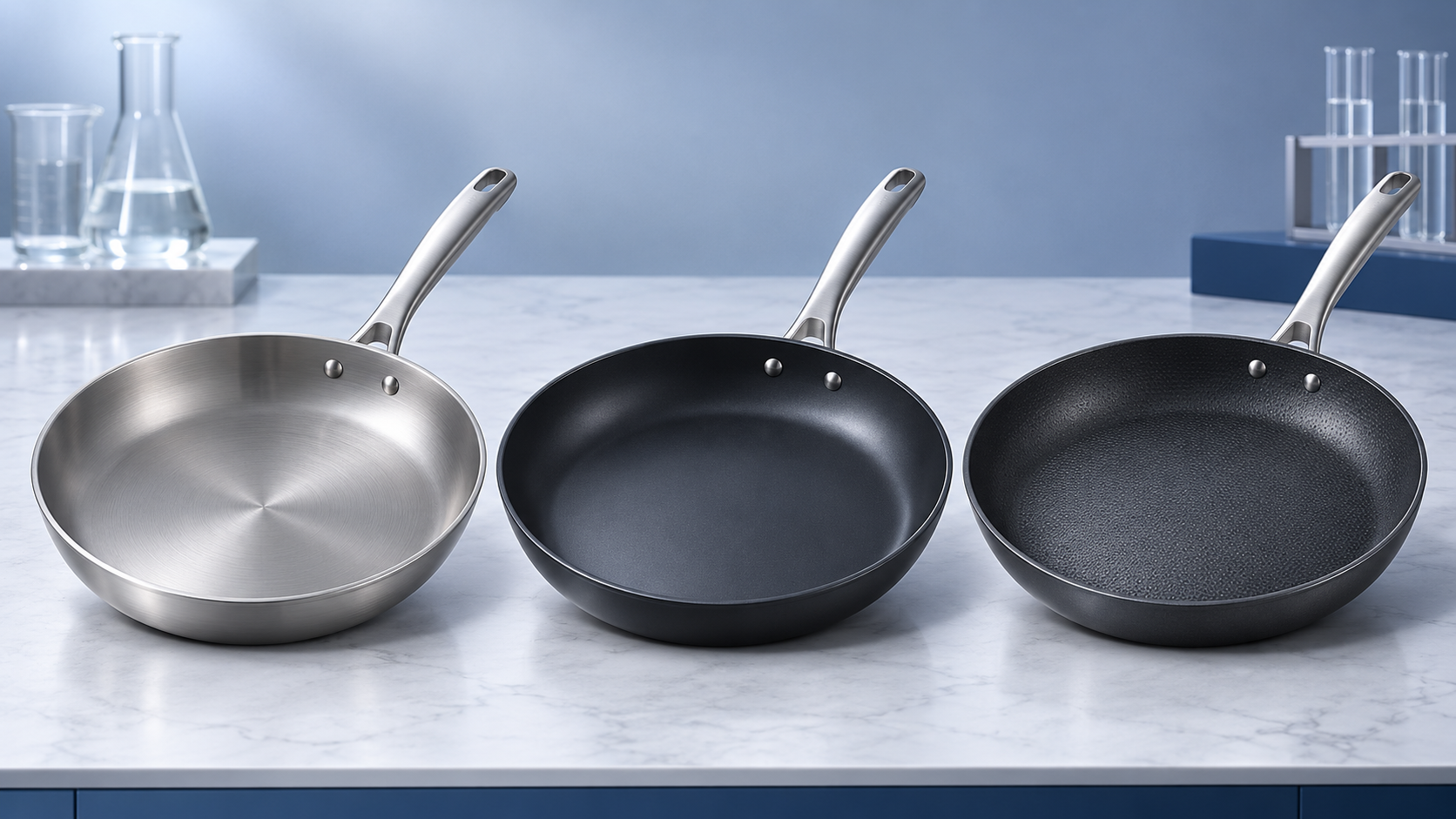
1. Quick Overview: Material Nature Comparison Across 3 “Titanium” Categories
| Comparison Dimension | 1. Pure Titanium (Uncoated) | 2. Nano-Titanium Coated | 3. Plasma Titanium Tech |
|---|---|---|---|
| Core Nature | Solid Physical Metal Ware (100% chemical coating-free) | Micro-Particle Reinforced Coated Ware (Base matrix blended with trace titanium powder) | Hardened Anchoring Layer Coated Ware (Thermal plasma-sprayed titanium ceramic matrix) |
| Substrate Material | TA1/TA2 Commercial Pure Titanium Plate, or Tri-Ply Clad Composite | Predominantly 3003/4006 Cookware-Grade Aluminum Alloy (Die-cast/Stamped) | Aluminum or Stainless Steel Substrate + Plasma-Sprayed Titanium Underlayer |
| Non-Stick Principle | Physical Thermal Control + Oil Film Barrier (Leidenfrost Phenomenon) | Low Surface Energy Chemical Film (PTFE fluoropolymer or sol-gel ceramic matrix) | Composite System (Plasma-sprayed anchoring foundation + non-stick topcoat) |
| Out-of-the-Box Slickness | ★★☆☆☆ (Zero chemical coating; strictly requires preheating & oil management) | ★★★★★ (Effortless out-of-the-box food release; lotus-leaf hydrophobic effect) | ★★★★★ (Effortless out-of-the-box food release; reinforced anchoring base) |
| Structure & Lifespan Profile | Exceptional Structural Longevity (Immune to acid/alkali corrosion; zero coating peeling) | Standard Consumable Lifecycle (Dependent on routine care; sensitive to high heat & metal tools) | High Mechanical Interlock (Mitigates large-sheet peeling/blistering; topcoat still wears over time) |
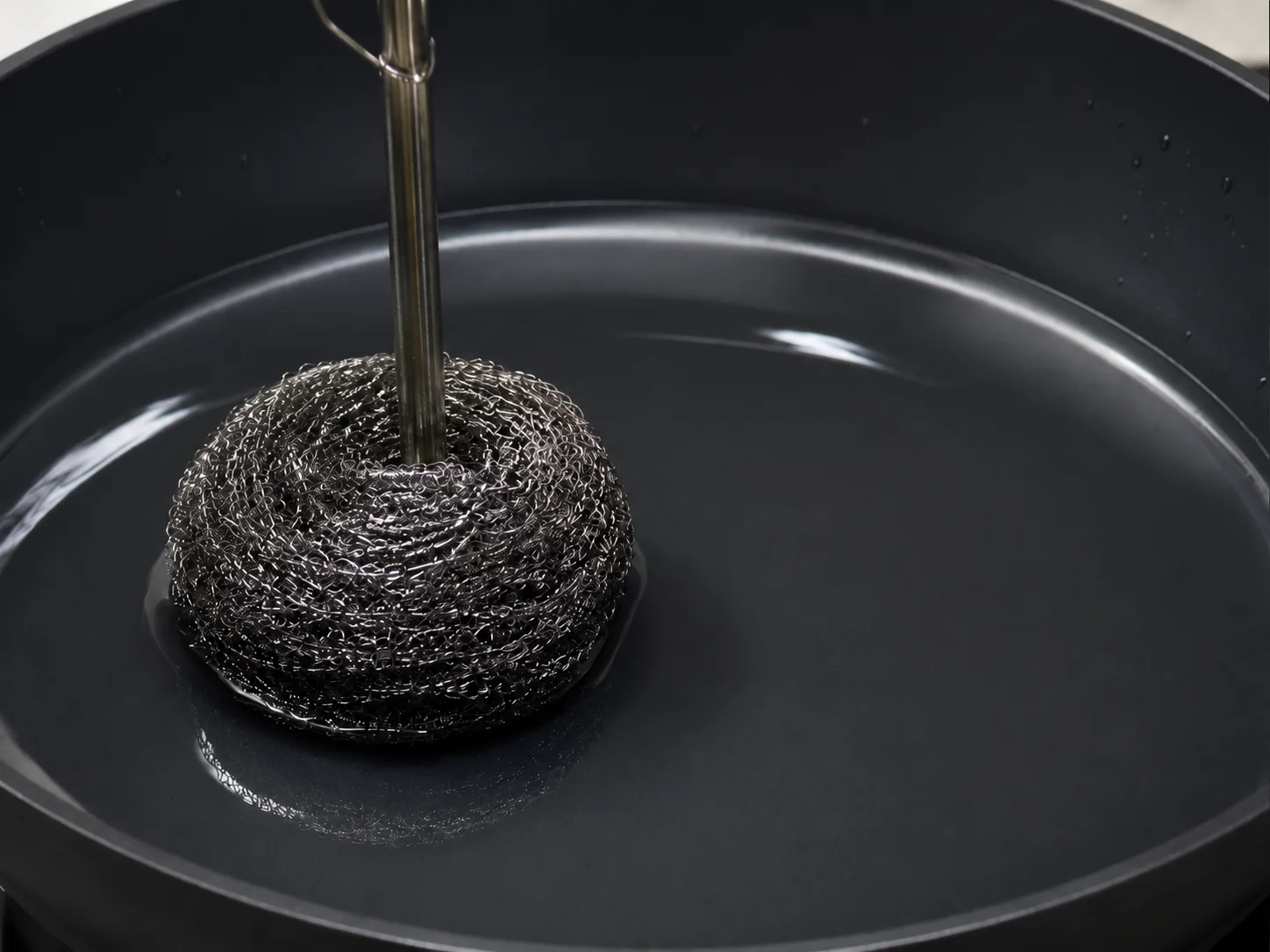
| Abrasion & Scratch Resistance | ★★★★★ (Metal utensils, steel wool, and hard-shell foods cause zero coating failure) | ★★☆☆☆ (Strictly avoid metal utensils, steel wool, and abrasive scrubbing) | ★★★★☆ (Superior base adhesion over standard coatings; topcoat still requires care) |
| Food Contact Safety Standards | Inert Biocompatible Metal (0% PFAS/PTFE, zero heavy metal or acid-base leaching) | Requires Verified Lab Reports (Focus on PFAS-Free compliance and heavy metal migration) | High Adhesion Integrity (Prevents conventional coating delamination into cooked food) |
2. In-Depth Manufacturing & Material Deconstruction
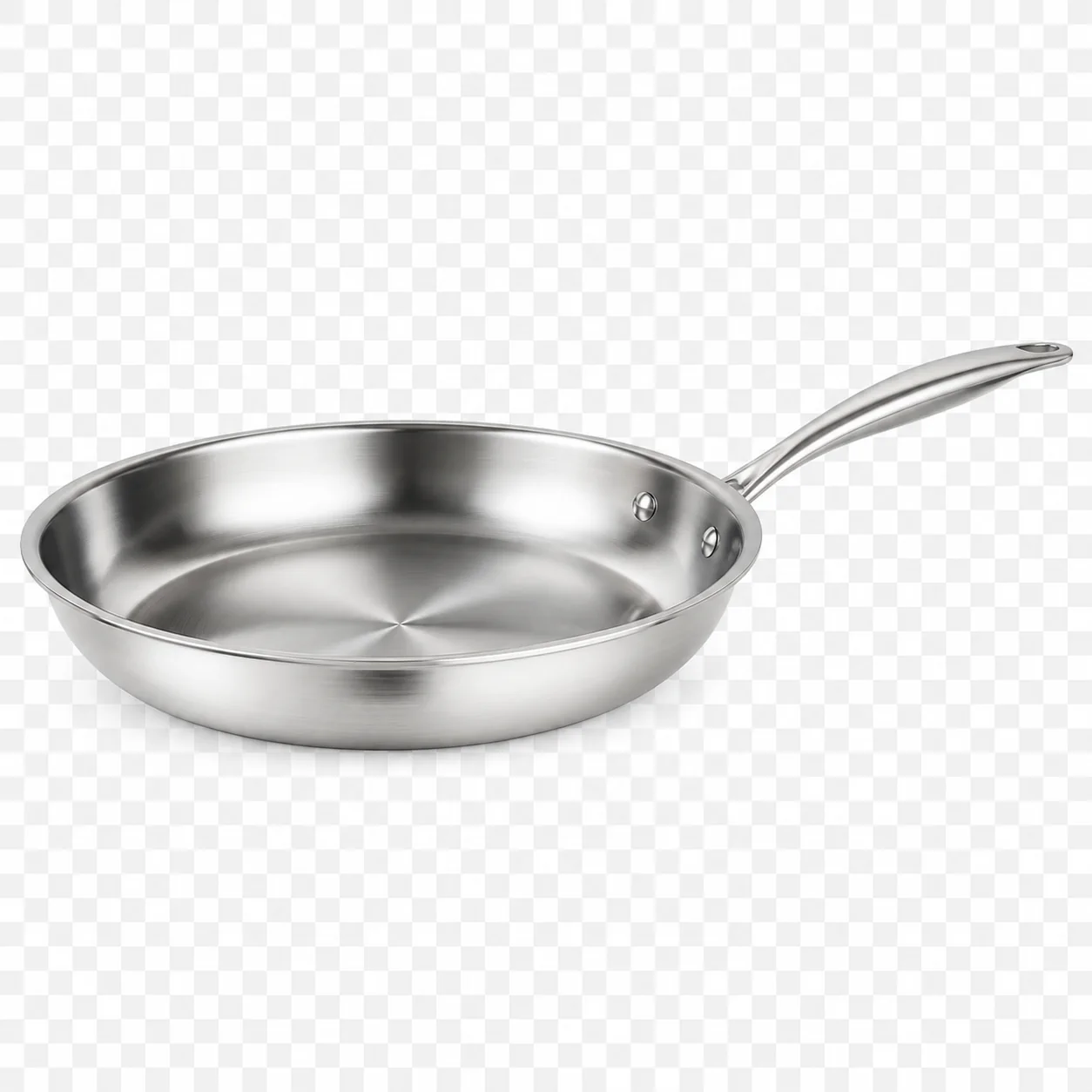
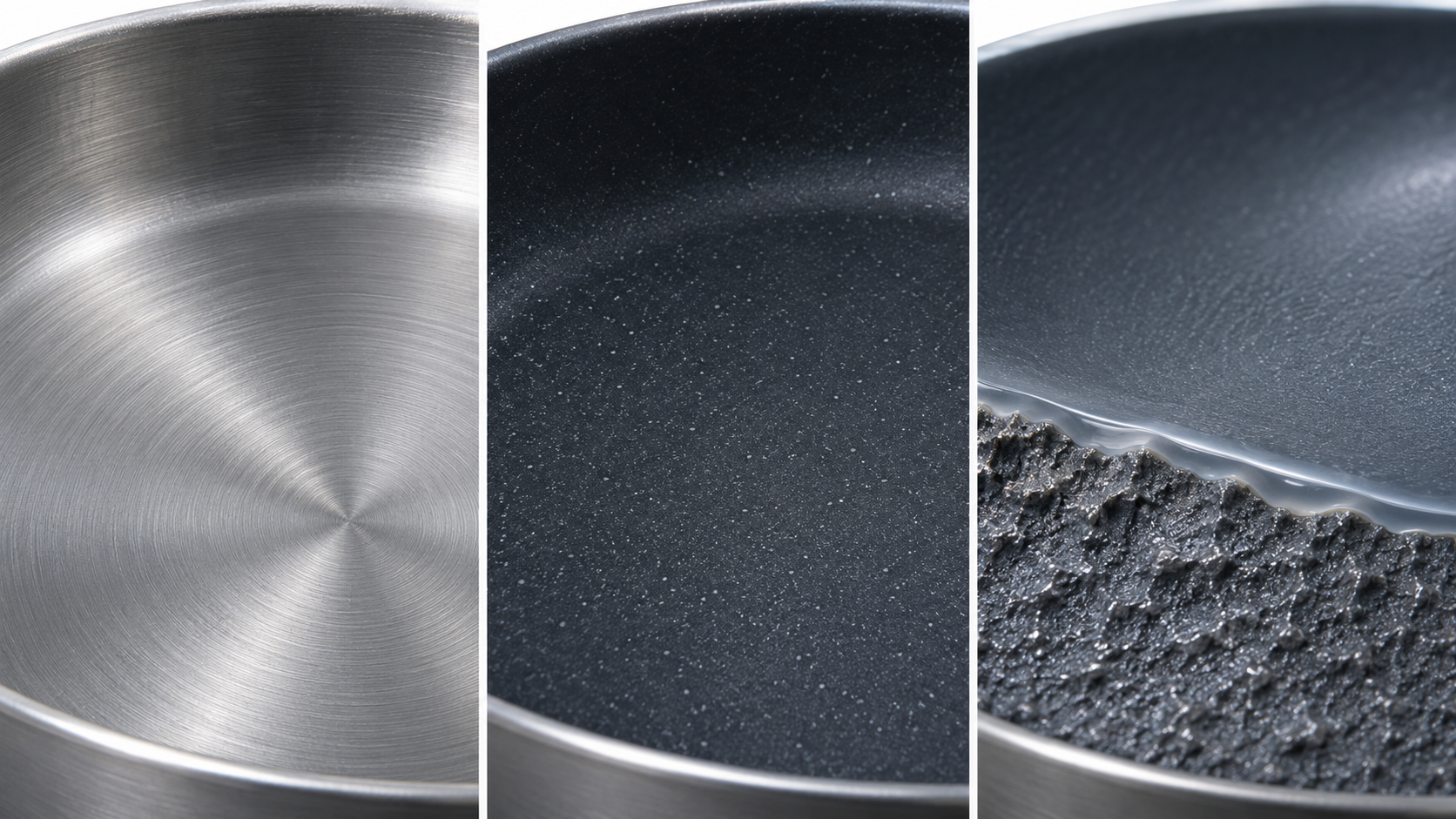
2.1 Pure Titanium (Uncoated) Cookware — Genuine Biocompatible Metal, But Demands Culinary Technique
• Material Specifications & Engineering Principles: The cooking surface directly in contact with food is 100% Commercial Pure Titanium (typically Grade TA1/TA2, compliant with ASTM B265). Under ambient atmospheric conditions, titanium spontaneously reacts with oxygen to generate a self-passivating, dense Titanium Dioxide (TiO₂) layer that is virtually impervious to aggressive organic acids, strong bases, and high-salinity foods.
• Common Promotional Claims: “Pure Titanium Physical Non-Stick”, “Aerospace Medical-Grade Cookware”, “Heirloom Pan for Generations”.
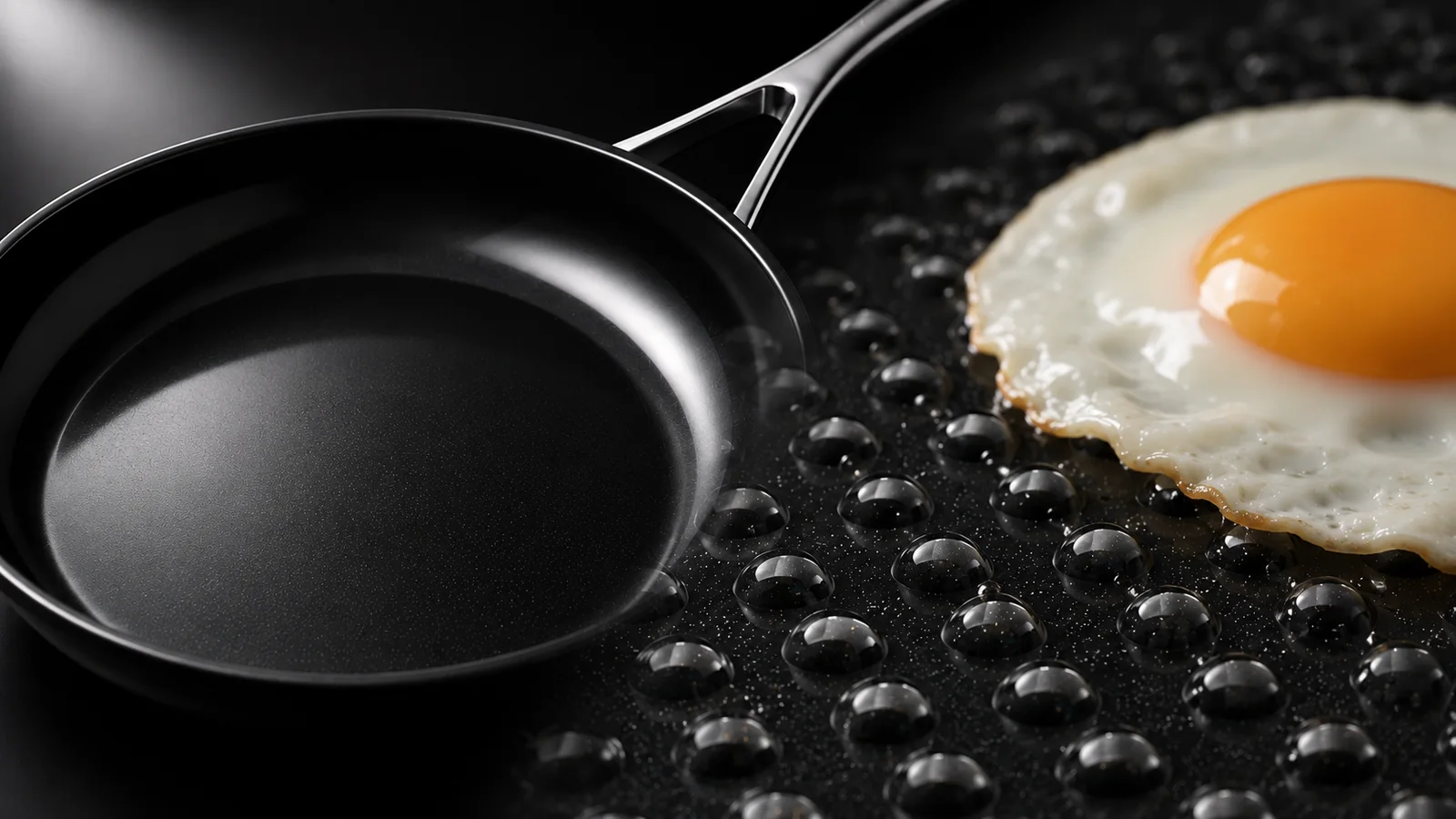
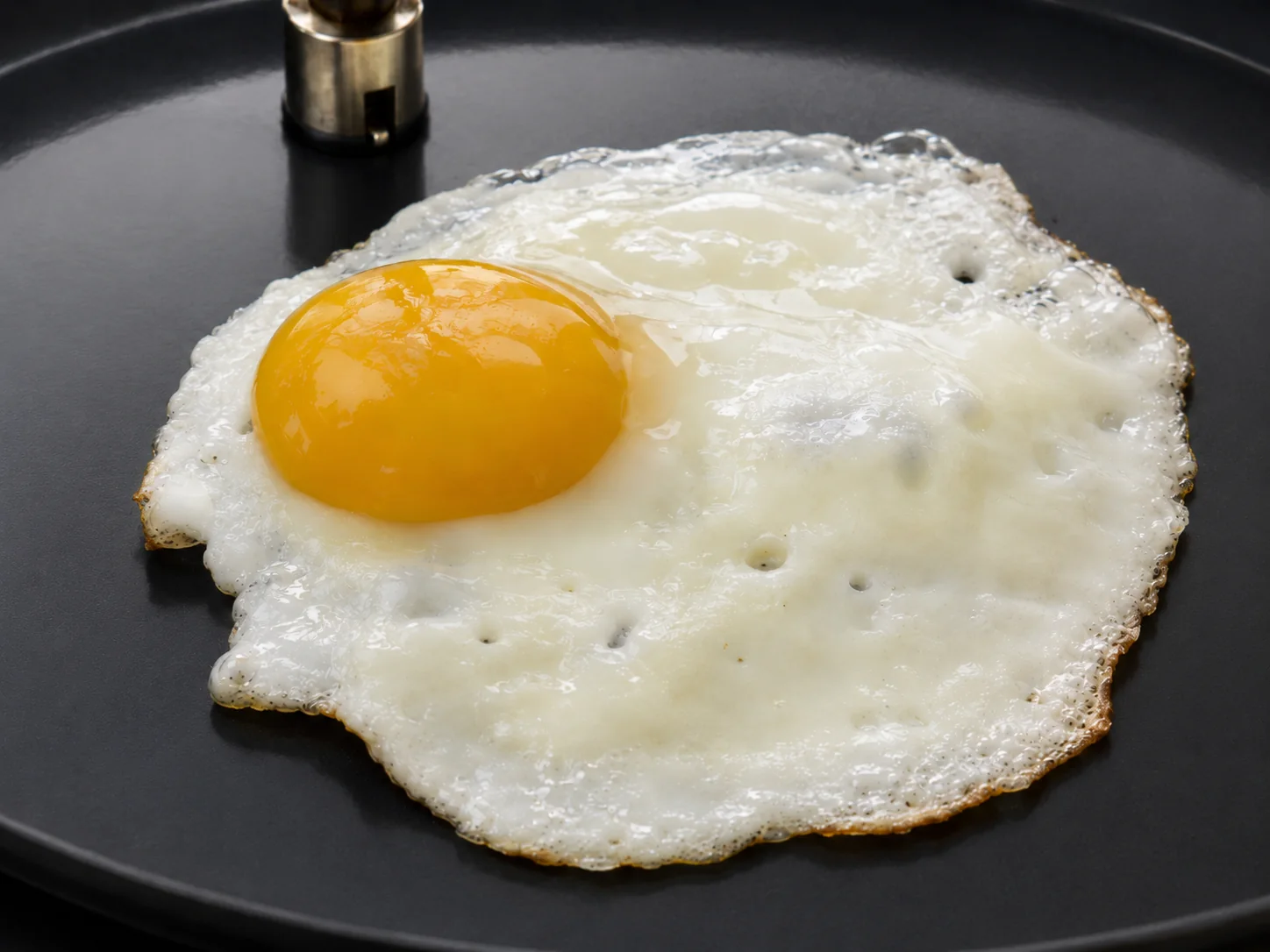
• Technical Fact #1 (Pure Titanium Has No Inherent Non-Stick Chemistry): Bare solid titanium does not possess native low-surface-energy chemical properties. Cracking an egg into a cold titanium pan with cold oil will result in immediate sticking. Non-stick release relies entirely on the Leidenfrost effect (water droplet floating test upon reaching optimal preheating) paired with a properly heated oil barrier—following the exact culinary mechanics of traditional carbon steel or cast iron.
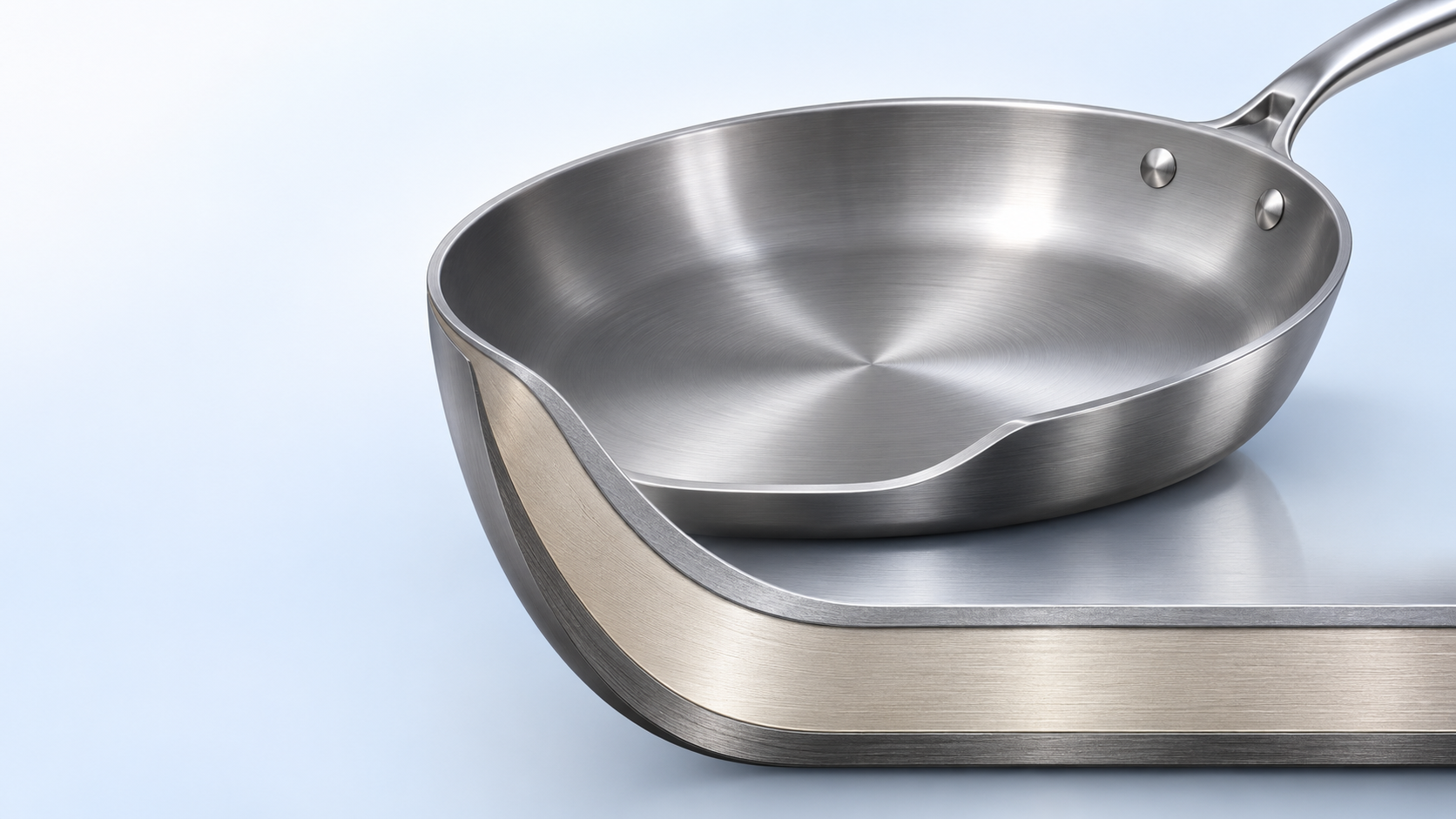
• Technical Fact #2 (Thermal Conductivity & Tri-Ply Clad Solutions): Monolithic pure titanium exhibits low thermal conductivity (approx. 17–22 W/m·K, roughly 1/10th that of aluminum). A single-ply titanium pan is prone to localized hot spots, scorching food in the center while leaving outer edges undercooked. Consequently, premium cookware manufacturers utilize Tri-Ply Roll-Bonded Clad Construction (Interior Pure Titanium + Core Aluminum for Fast Heat Dispersion + Exterior 430 Magnetic Stainless Steel for Full Induction Compatibility).
• True Buyer Value: 100% chemical coating-free, 0% PFAS/PTFE, zero nickel or heavy metal leaching. Ideal for health-conscious users seeking structural longevity and chemical neutrality.
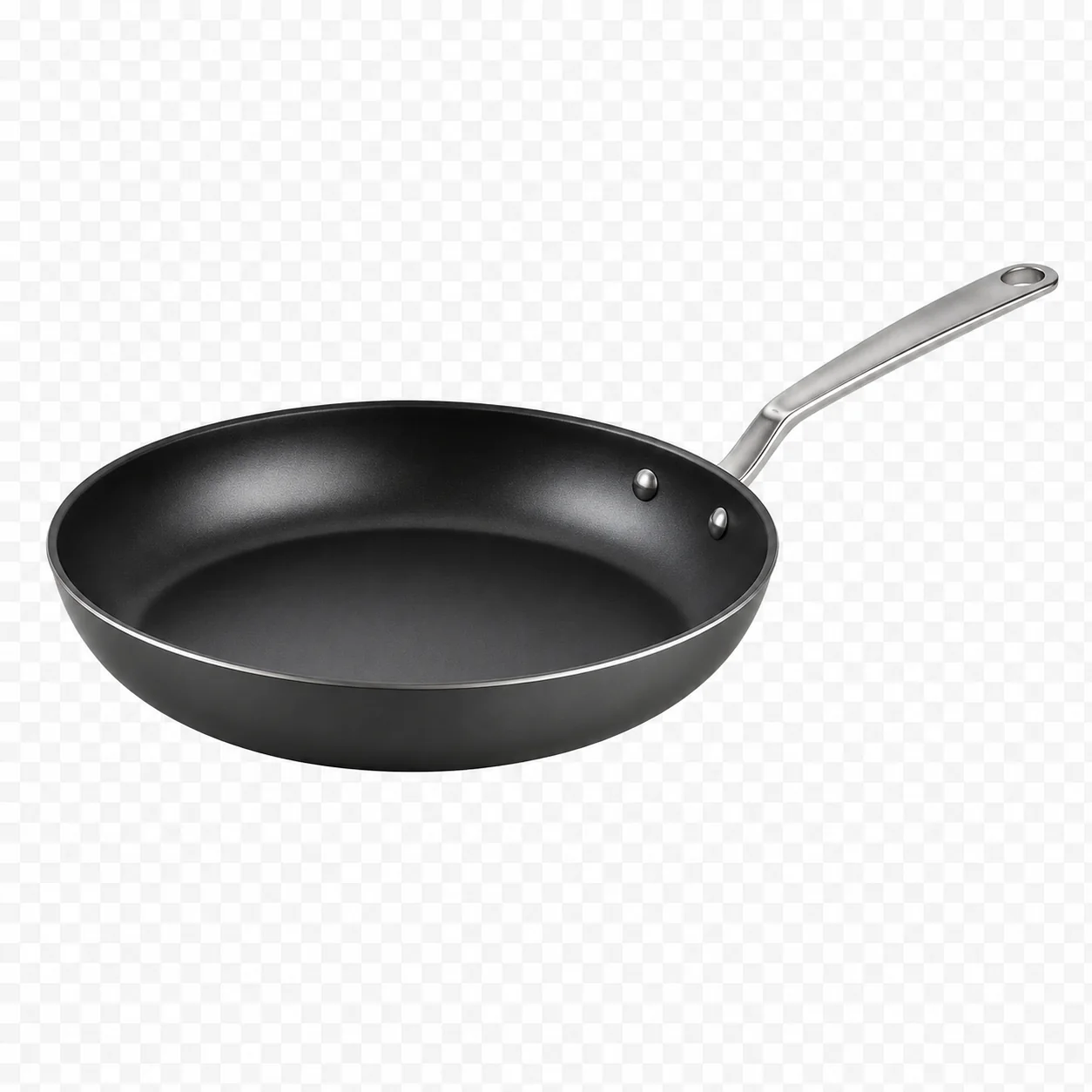
2.2 Nano-Titanium Coated Cookware — Particulate-Reinforced Coatings Bound by Standard Polymer Laws
• Material Specifications & Engineering Principles: The structural body is predominantly made from standard cookware-grade aluminum alloy (such as 3003 stamped aluminum or A383 die-cast aluminum). During coating formulation, sub-micron or nano-scale titanium dioxide (TiO₂) or titanium carbide particles are blended into the liquid polymer (PTFE fluoropolymer) or sol-gel ceramic matrix as mineral reinforcement fillers.
• Common Promotional Claims: “Nano-Titanium Space-Age Non-Stick”, “Titanium-Infused Diamond Hardness”, “Indestructible Aerospace Coating”.
• Technical Fact #1 (Non-Stick Performance Governed by Base Polymer/Ceramic): The actual non-stick functionality is delivered by the underlying low-surface-energy resin or silicone/ceramic network. Trace titanium additives act as microscopic fillers to enhance surface hardness, but do not convert the surface into a metallic titanium sheet.
• Technical Fact #2 (Standard Service Cycle & Care Requirements): While particulate reinforcement improves abrasion resistance, polymer coatings remain subject to thermal expansion stresses, dry overheating (beyond 260°C / 500°F), and abrasive scouring. Steel wool or sudden cold-water quenching will still degrade the coating over time.
• True Buyer Value: Highly accessible, ultra-slick out-of-the-box food release with minimal oil. Perfect as an affordable, user-friendly daily pan intended for routine replacement.
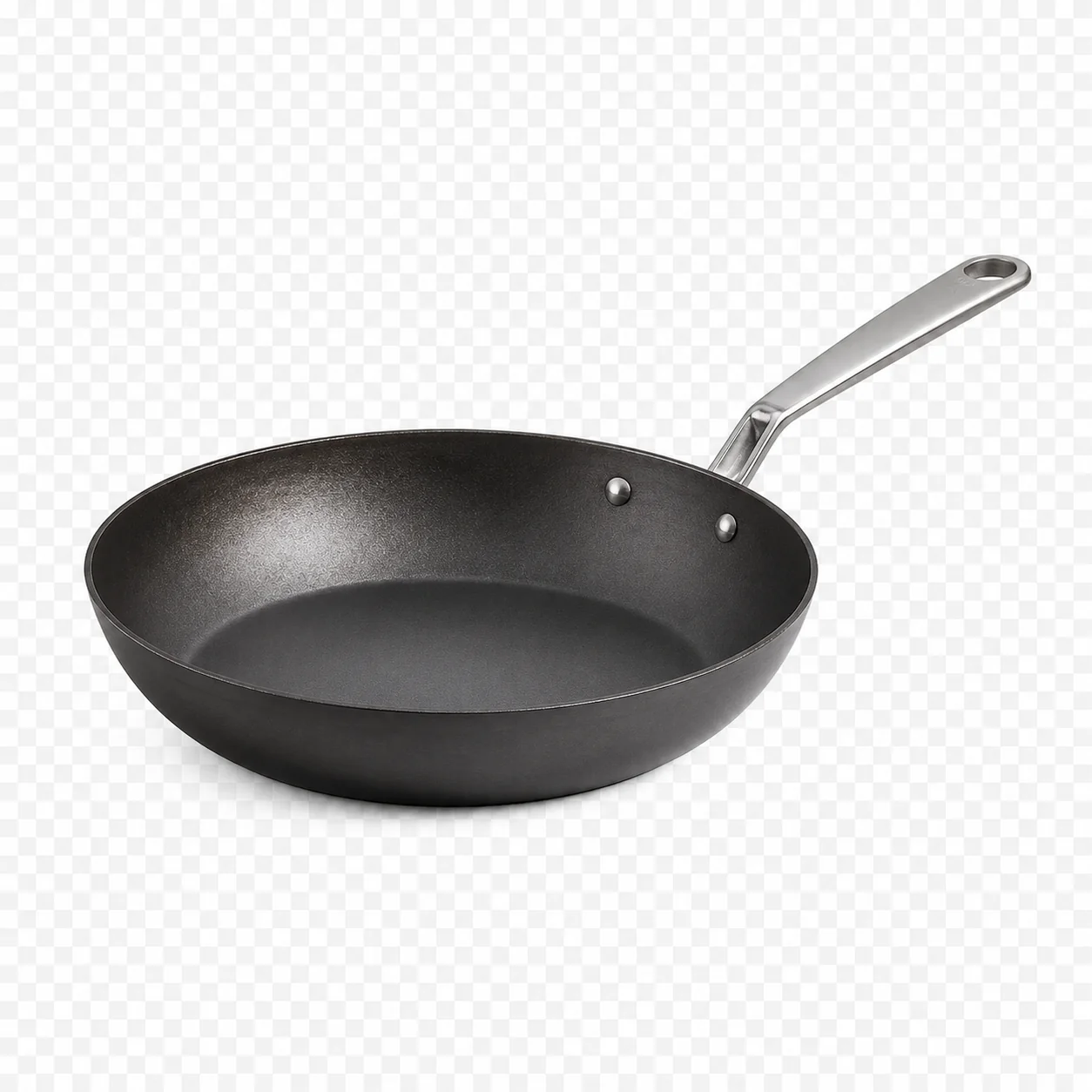
2.3 Plasma Titanium Technology — Industrial-Grade Thermal Arc-Sprayed Anchoring Foundation
• Material Specifications & Engineering Principles: This industrial process employs High-Velocity Thermal Plasma Spraying. An ultra-high-temperature plasma arc (reaching upwards of 10,000°C) melts titanium or titanium-ceramic composite powders, projecting them onto a prepared substrate at supersonic speeds. This forms a rock-hard, microscopically textured titanium matrix anchoring base, onto which food-grade non-stick topcoats are applied.
• Common Promotional Claims: “Plasma Titanium Armor”, “Diamond-Grade Scratch Resistance”, “Permanent Anti-Peel Bonding”.
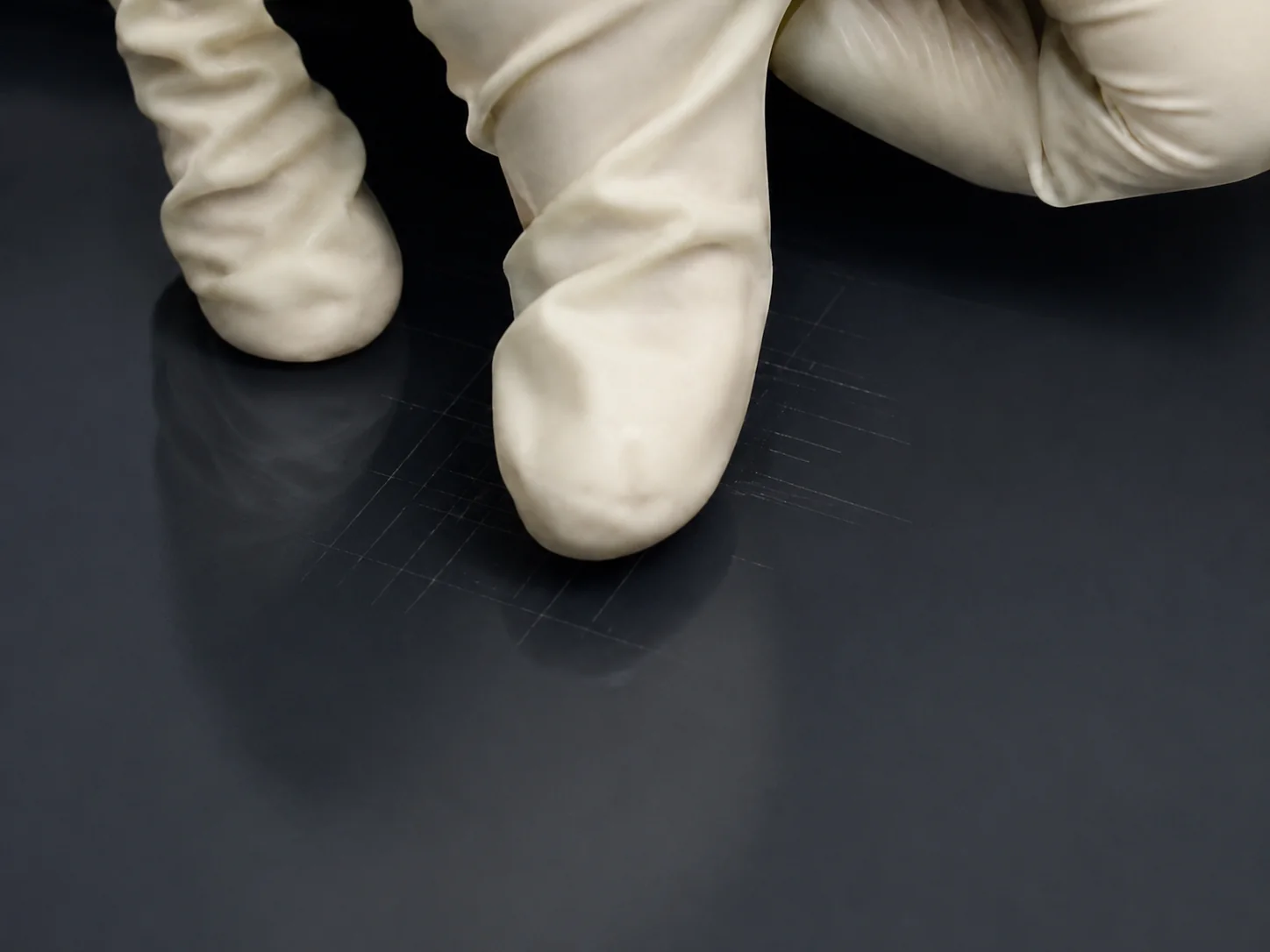
• Technical Fact #1 (Interfacial Anchoring vs. Topcoat Wear): Plasma spraying solves the major defect of cheap pans: weak substrate adhesion leading to large-scale blistering and peeling. The mechanical interlocking is exceptionally robust. However, the delicate non-stick topcoat in contact with food is still subject to progressive frictional wear during extended use.
• Technical Fact #2 (Performance Transition Over Time): Once the slick topcoat wears down after years of heavy culinary use, the exposed titanium base layer remains firmly anchored without releasing toxic compounds, transitioning the cooking performance toward that of a textured hard-base pan.
• True Buyer Value: Offers substantially higher resistance against coating blistering and delamination compared to traditional single-layer coatings. An ideal middle ground for consumers seeking effortless food release with reinforced structural bonding.
3. Buyer FAQs & Evidence-Based Purchasing Guidance
Q1: Is the manufacturer’s claim of “100% Physical Non-Stick on Bare Titanium Without Technique” scientifically valid?
No. Any solid metal surface (pure titanium, cast iron, or stainless steel) possesses inherent surface energy that readily binds with denatured food proteins. Clean food release on bare titanium requires heat discipline (preheating to achieve the Leidenfrost floating boundary) and a light oil barrier. If a pan releases food effortlessly on a cold surface with zero oil, it undeniably incorporates a chemical non-stick surface formulation.
Q2: Do Titanium-Reinforced or Plasma Titanium pans carry PFAS (Teflon) health and regulatory risks?
It depends entirely on the coating classification:
1. Traditional PTFE Systems: Safe and food-contact compliant below 260°C (500°F), but subject to increasing international regulatory scrutiny (such as the EU ECHA universal PFAS restriction proposal and California AB 1200 disclosure mandates).
2. Inorganic Sol-Gel Silica (SiO₂) Ceramic Systems: Formulated from pure mineral-based silica networks, naturally 100% MADE WITHOUT PFAS, PTFE, or PFOA.
Always verify compliance through accredited third-party test reports (e.g., FDA 21 CFR 175.300 or German LFGB §30/§31 by Intertek or TÜV Rheinland).
Q3: Pure titanium cookware is expensive. How can buyers detect fake or misleading “titanium” pans?
Material authenticity can be verified via three standardized tests:
1. Magnetic Test: Grade TA1/TA2 pure titanium is completely non-magnetic (in tri-ply clad pans, the titanium interior is non-magnetic, while the 430 exterior is magnetic for induction compatibility).
2. Material Markings: Authentic products clearly stamp material grades (e.g., TA1 / Gr. 1 / Pure Titanium ≥99.5%), rather than vague commercial buzzwords like “Titanium Gold”.
3. Density & Weight: Titanium has a density of ~4.51 g/cm³, noticeably lighter than stainless steel (~7.9 g/cm³). If a single-ply pan feels heavy like cast iron, it is likely coated stainless steel or heavy alloy.
Q4: If a coated pan is deeply scratched down to the base metal, is it still safe for food preparation?
It depends on the substrate material:
• Aluminum Substrate: If scratches expose raw aluminum, retirement/replacement is recommended. While ingested microscopic flakes of food-grade coating are chemically inert, raw aluminum exposed to high-heat acidic or salty foods can lead to unwanted metal ion migration.
• Tri-Ply Stainless Steel Substrate: If the substrate is food-grade 304/316L stainless steel, exposed areas pose no toxic hazard, though localized non-stick release will be reduced.
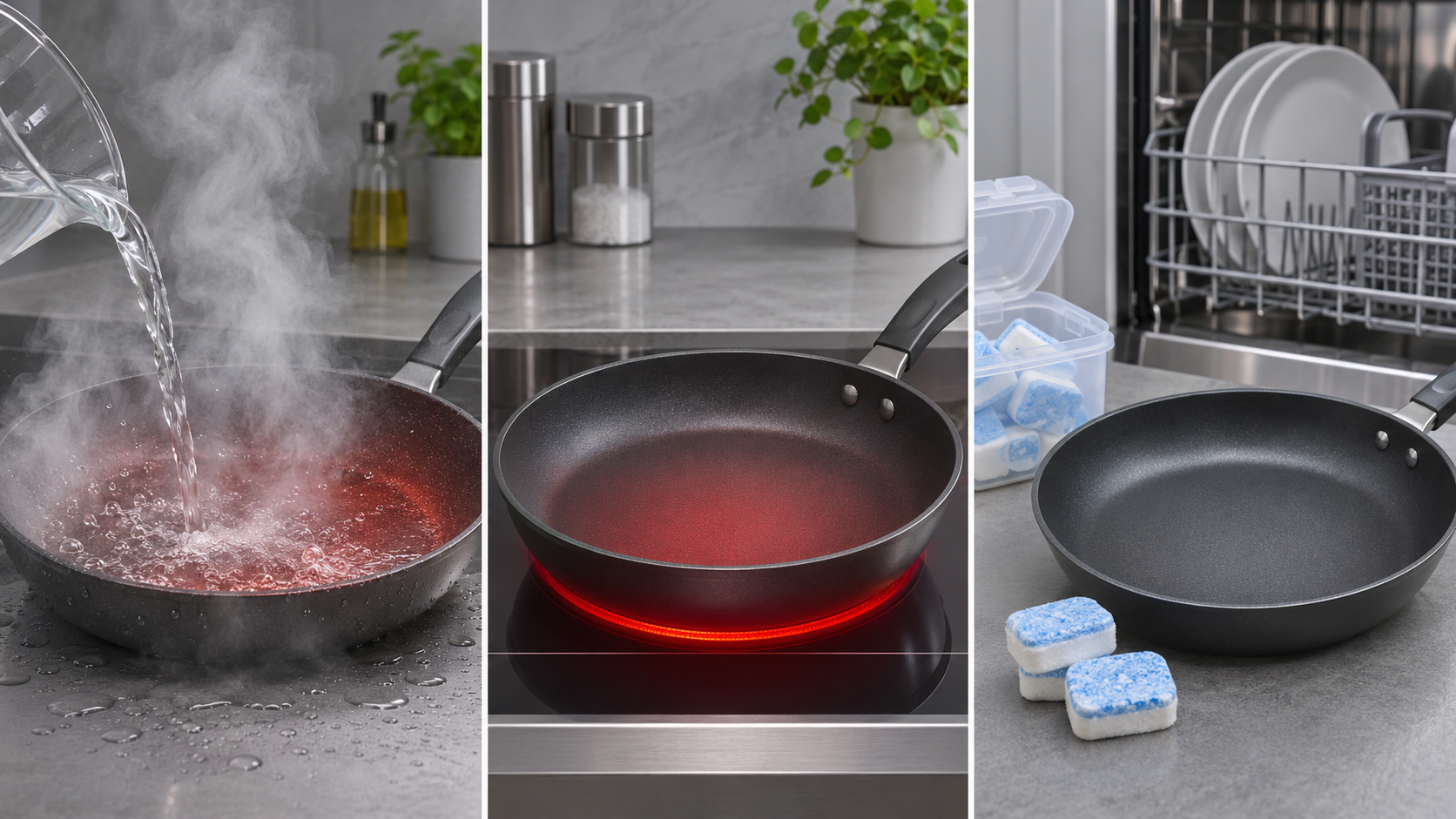
Q5: What are the primary user habits that cause premature coating degradation?
Laboratory accelerated aging tests identify three main causes of premature failure:
1. Thermal Shock: Immersing a sizzling hot pan (>180°C) directly under cold water creates micro-fissures due to mismatched thermal contraction between coating and substrate.
2. Dry Overheating: Empty preheating on high-output burners rapidly exceeds the safe thermal ceiling (>260°C).
3. Caustic Dishwasher Detergents: High-pH commercial dishwasher tablets chemically oxidize and degrade interfacial bonding edges.
4. Shangwey Manufacturing Solutions: Engineering Quality Beyond Buzzwords
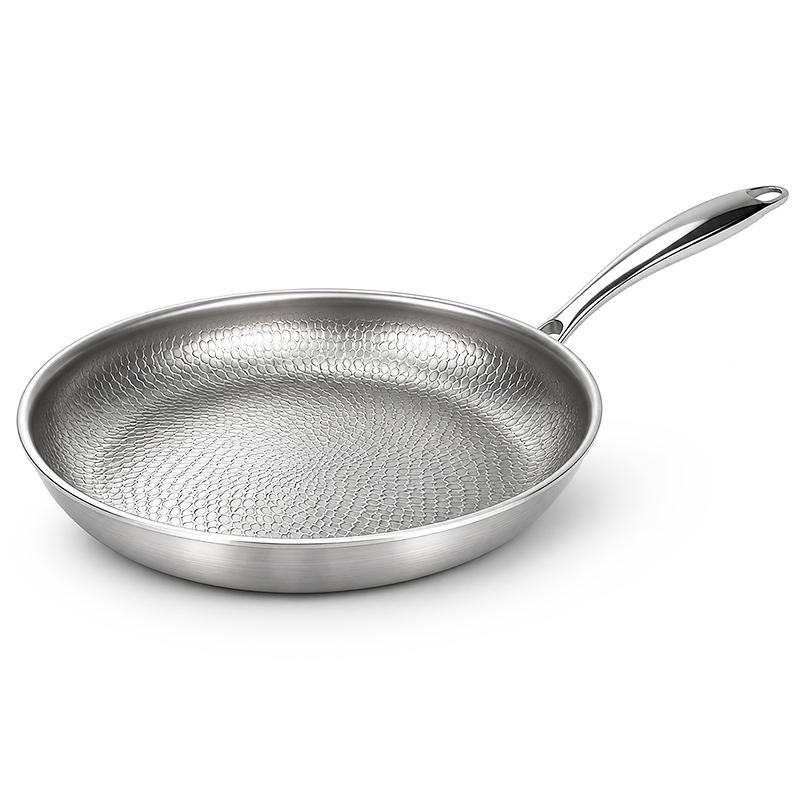
As an international cookware OEM/ODM manufacturer, Shangwey Cookware Co., Ltd. (Jiangmen) rejects deceptive “pseudo-titanium” gimmicks, addressing the dual pain points of soft coating wear and pure metal food sticking through verified digital engineering solutions:
1. Hammered Tri-Ply Clad Stainless Steel with SiO₂ Clear Ceramic Topcoat (HN Series)
• Pure Inorganic Sol-Gel Silica System: Utilizing SPG-7612-400K water-based Sol-Gel transparent silica ceramic coating (2–5 μm dry film thickness), 100% preserving the aesthetic visual texture of forged metal hammer marks.
• Dual Mechanical & Laser Pre-Treatment: Combining “Mechanical Sandblasting Roughness + Femtosecond Laser Micro-Area Cleaning” to strip microscopic oxides and contaminants, constructing an ultra-pure interface for maximum coating anchoring that prevents blistering and peeling.
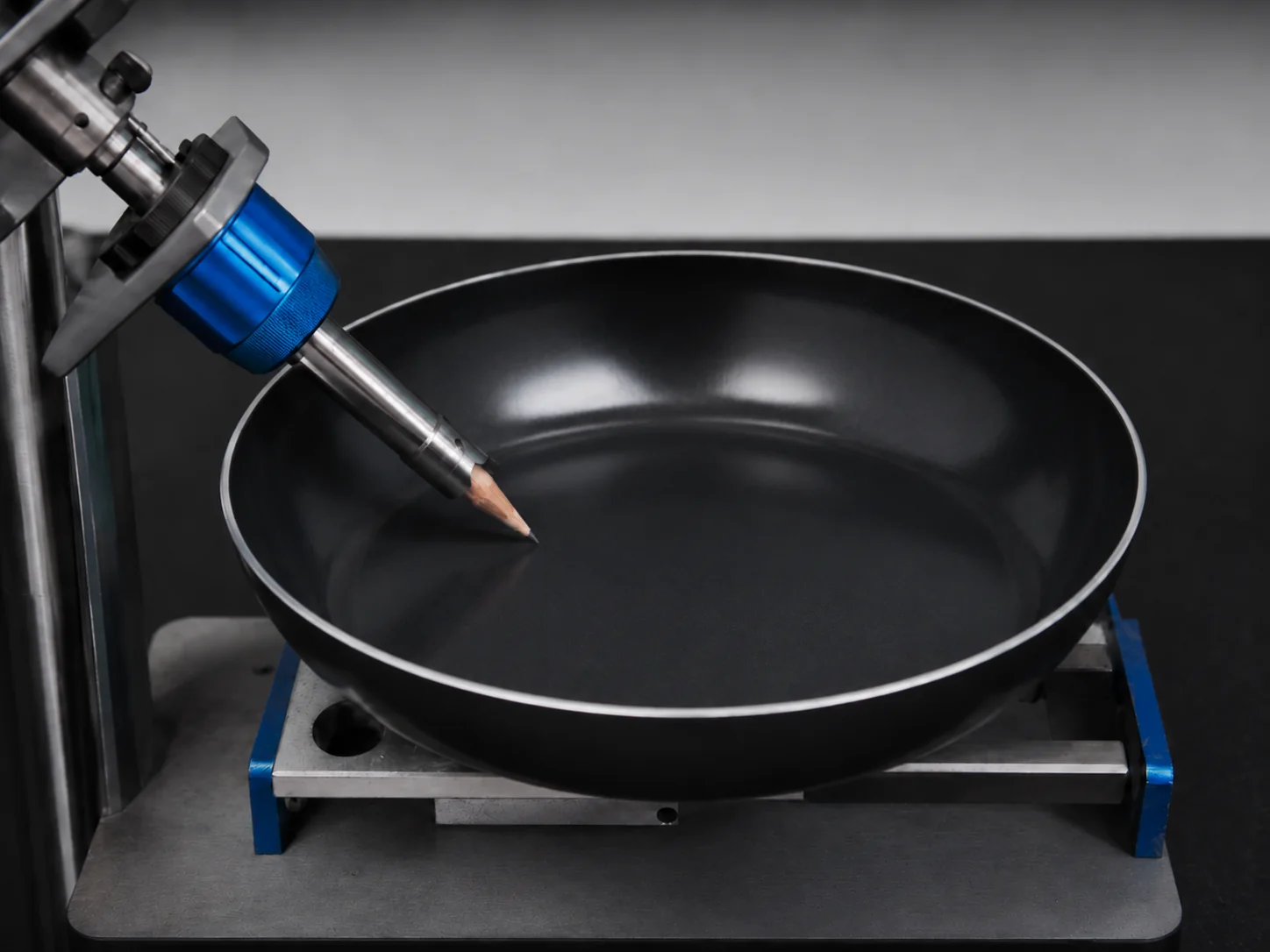
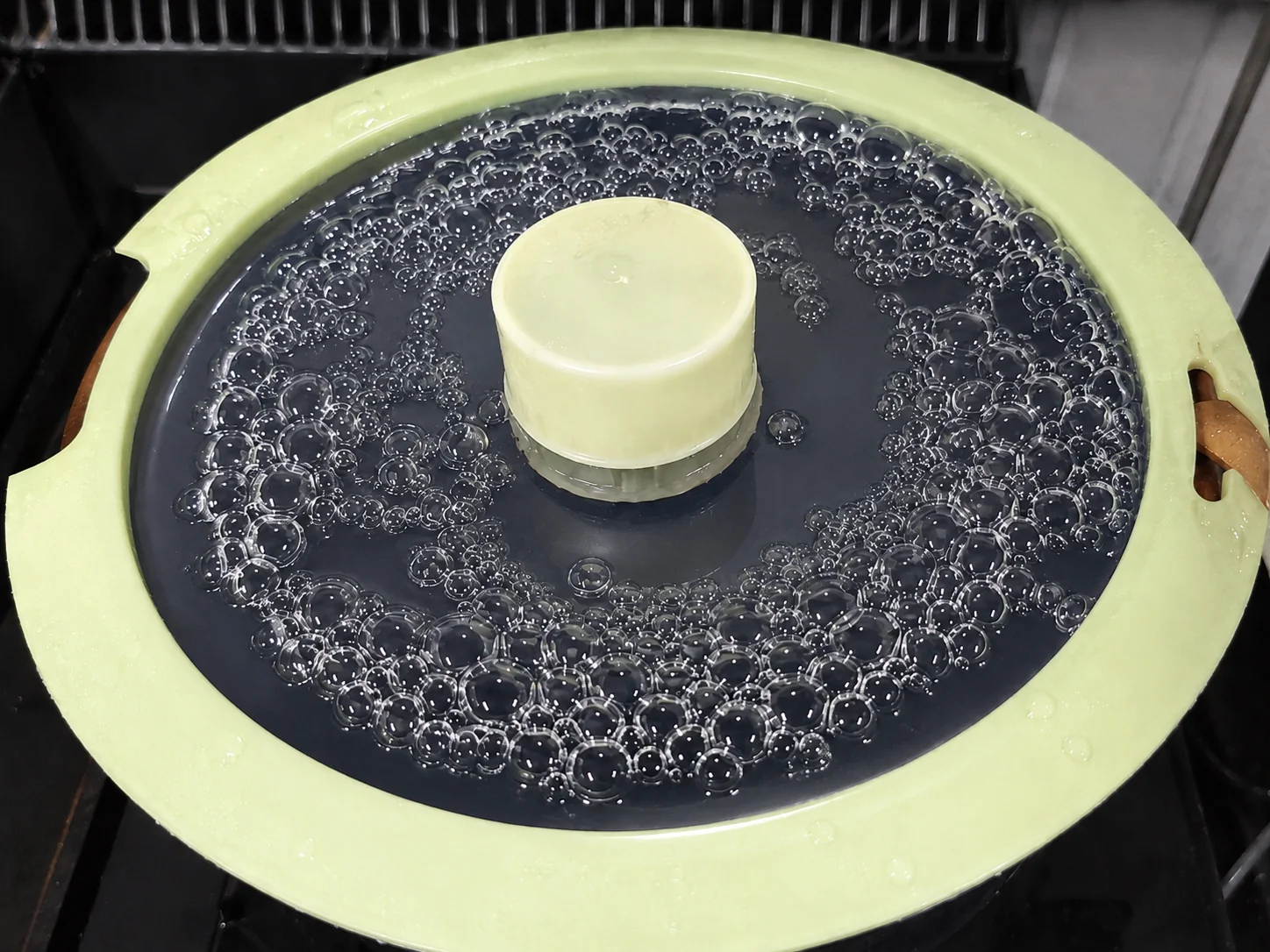
• ≥ 6H Pencil Hardness & 280°C Thermal Ceiling: Compliant with ASTM D3363 pencil hardness testing at ≥ 6H (surpassing traditional 2H–3H PTFE coatings) and heat-resistant up to 280°C (536°F) for high-heat stir-frying without hazardous fumes. Water contact angle > 120° for effortless cleaning.
2. Tri-Ply Clad Construction for Uniform Thermal Distribution
• Interior Cooking Layer: Food-grade 18/8 (SUS 304) / 316L Stainless Steel or TA1 Pure Titanium for superior chemical inertness and corrosion resistance.
• Core Thermal Conductor: High-purity 1050/3003 Aluminum core ensuring rapid, even heat dispersion without scorching hot spots.
• Exterior Induction Base: 18/0 (SUS 430) Magnetic Stainless Steel providing universal compatibility across induction, gas, radiant, and electric cooktops.
3. Certified Global Food-Contact Compliance & Traceability
• Intertek Test Report No. 241011060GZU-009: Verified under US FDA 21 CFR 175.300 (Resinous and polymeric coatings), with chloroform-soluble extractives recorded as ND (Not Detected / PASS).
• Intertek Test Report No. 241011060GZU-010: Tested under German LFGB §30/§31, EU Regulation (EU) No 10/2011, and EDQM Resolution CM/Res(2020)9, passing all sensory, overall migration, heavy metal release, and PFAS/PFOA screening tests (PASS).
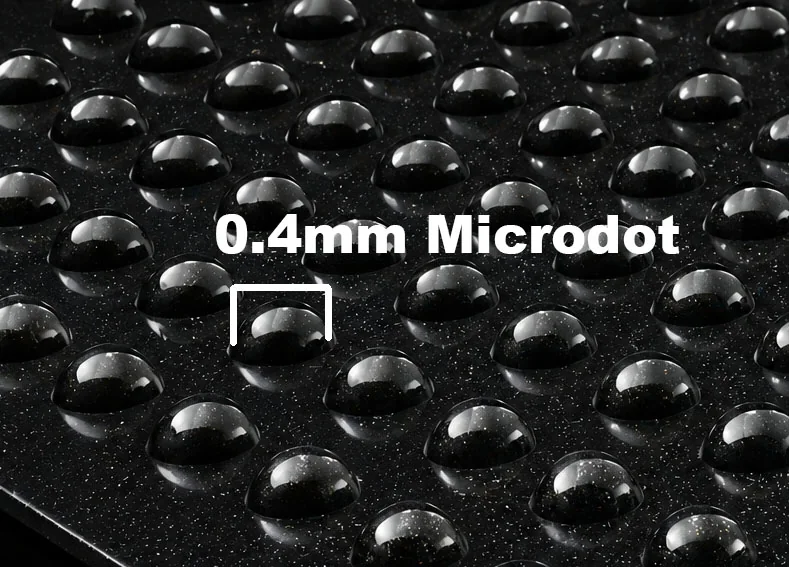
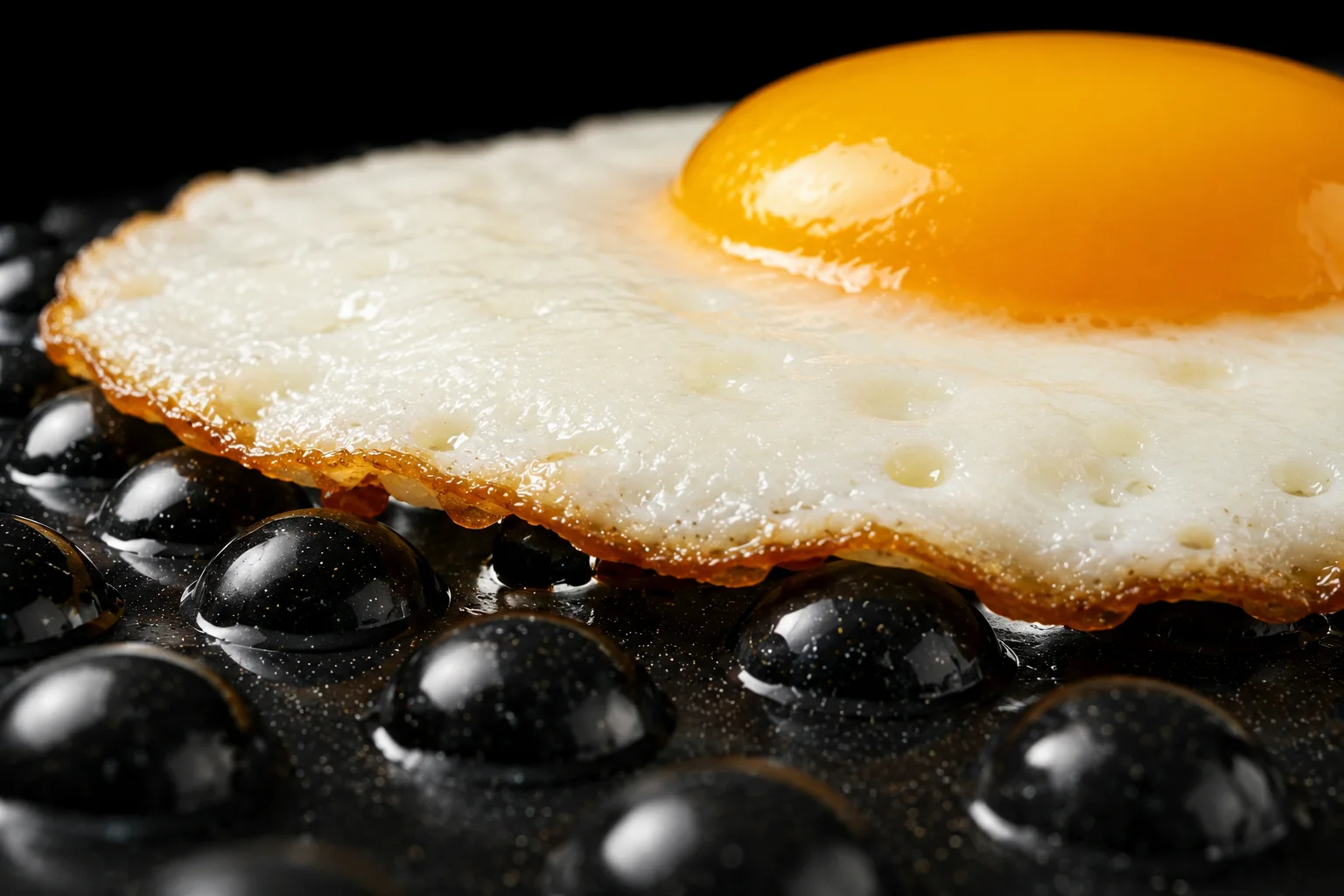
• TÜV Rheinland Test Report No. 168565159a 001: Verified for Shangwey Tri-Ply micro-dot/hammered metal and coating cookware under German LFGB standards, ensuring heavy metal migration is well below strict regulatory limits.
5. Sourcing & Purchasing Decision Matrix
→ Choose [Shangwey Tri-Ply Clad Pure Titanium (TA1+Al+430) or 316L Stainless Steel Cookware].
→ Choose [Shangwey Hammered Clear SiO₂ Ceramic Tri-Ply Cookware (≥6H Hardness / 280°C Heat Resistance)].
→ Choose [FDA/LFGB-Certified Ceramic or Micro-Particle Reinforced Aluminum Cookware].
Summary: Titanium is an outstanding engineering metal, but consumers should not pay for misleading marketing claims. By verifying core substrate structures (Tri-Ply Clad), transparent coating formulations (PFAS-Free SiO₂), and accredited lab certifications, buyers can invest in cookware built on genuine culinary performance and food safety.