Why do professional chefs exclusively use stainless steel mixing bowls in their kitchens?
KITCHEN ESSENTIALS
Stainless Steel Mixing Bowls · 4 min read
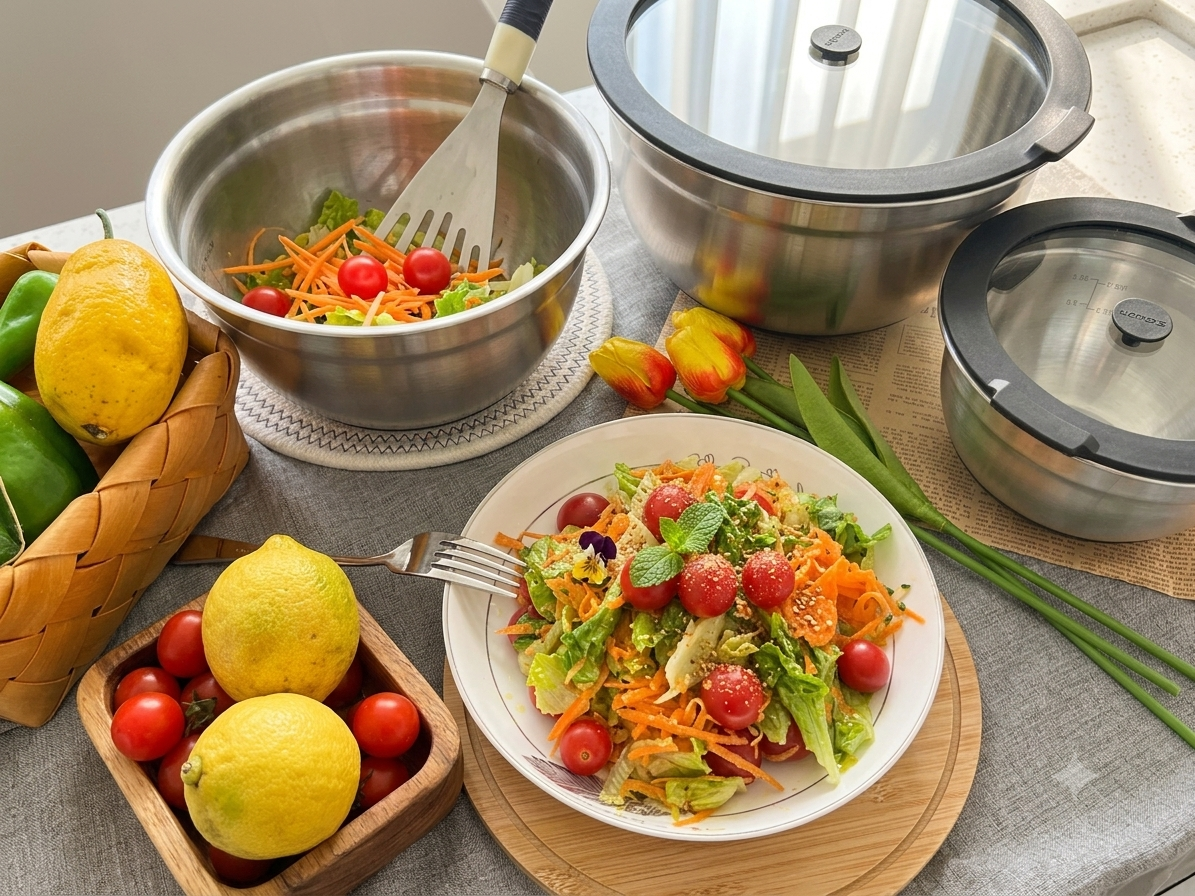
In a real kitchen, this is the bowl that ends up living on the counter.
Watch a chef work, whether it’s a cooking video or a behind-the-scenes clip from Hell’s Kitchen. Then look at what they actually reach for. It isn’t the ceramic bowl, and it isn’t the glass one either. It’s a stainless steel mixing bowl, usually one pulled off a stack of them.
Cost has almost nothing to do with it. These bowls simply behave better under pressure, and once you’ve cooked with one for a few months you stop thinking of it as a choice at all. So here’s the case for moving them to the front of the cabinet.
Four things stainless steel bowls do better
They don’t fight your wrist
Pick up a glass or ceramic bowl, then pick up a stainless one the same size. The difference is obvious. You notice it most at the worst possible moment: one hand holding the bowl, the other pouring batter, wrist already tired. Stainless is light enough that the bowl stops feeling like part of the job.
They survive being dropped
Kitchens are clumsy places. Bowls get knocked off counters, and when that bowl is glass you’re on your knees with a dustpan and a bad mood. Stainless lands, maybe picks up a small dent, and goes back into rotation the same evening. It scratches without cracking, too. That’s more than you can say for anything with a glaze on it.
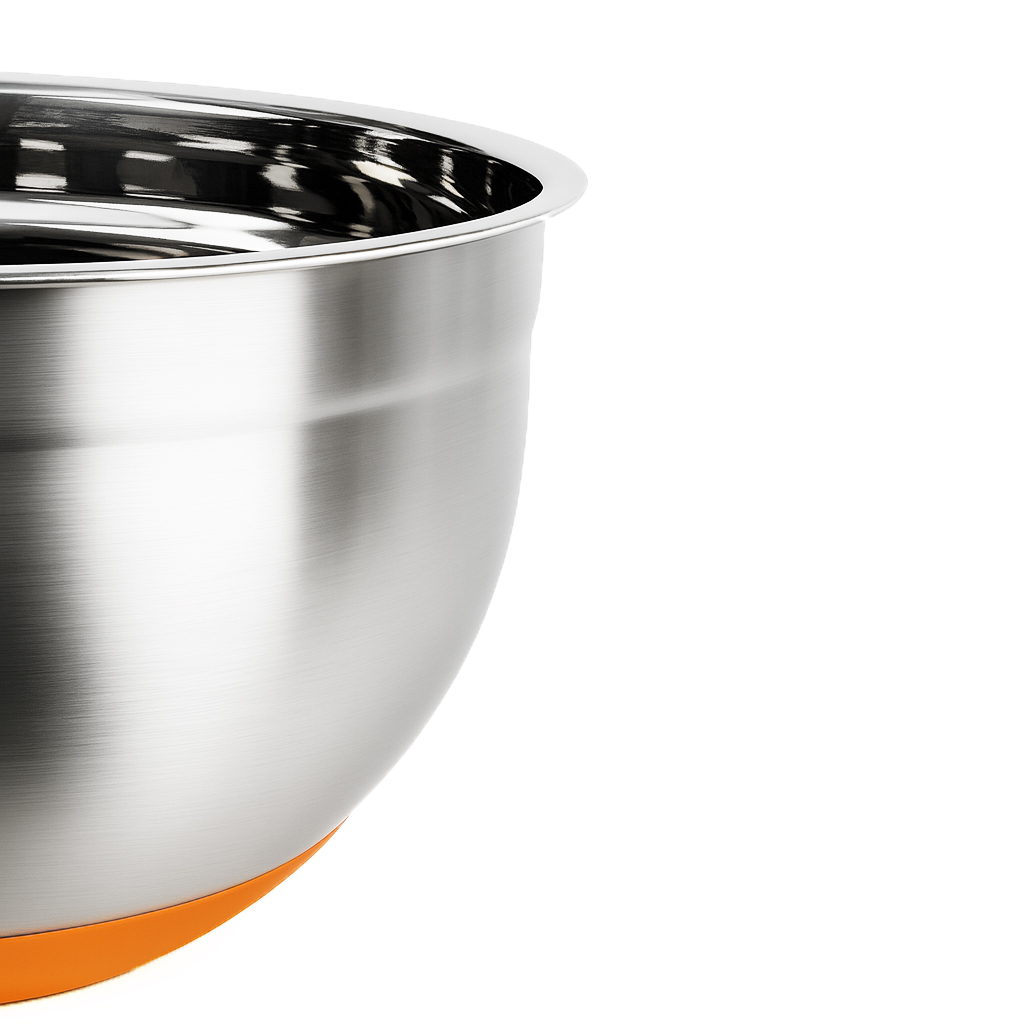
Thick brushed steel, rolled rim. This one dents before it breaks.
Curry doesn’t stay behind
Plastic holds on to grease and colour. Make one curry in a plastic bowl and it will smell faintly of curry for weeks, however many times you wash it. Stainless has no pores for any of that to soak into, so hot water and dish soap usually finish the job. That also leaves bacteria with very little to hold on to. Nothing hiding in scratches, nothing lingering the next morning.
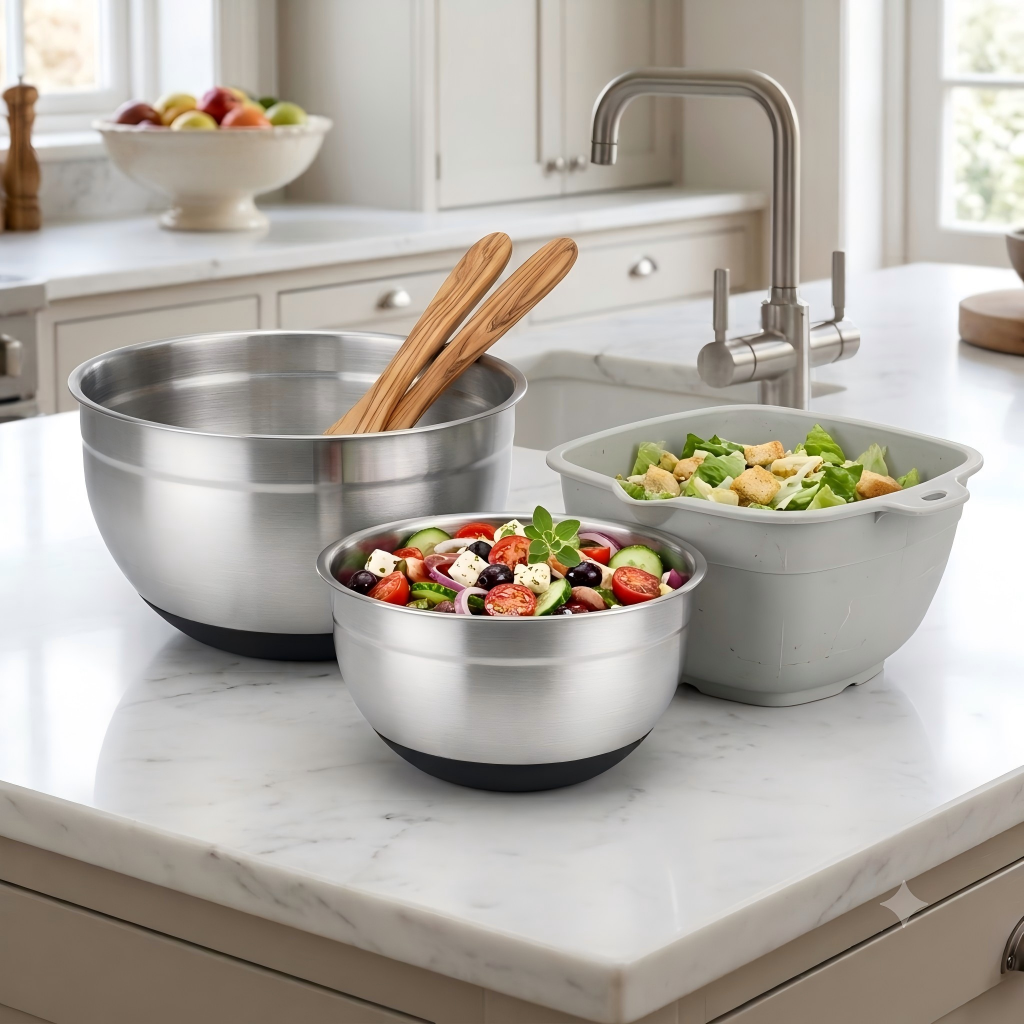
Stainless on the left, plastic on the right. Only one of them comes back clean.
Heat and cold move through it quickly
Steel passes temperature along fast, in both directions. That’s why it turns up everywhere you’re melting something, chilling something, or waiting for a mixture to set. We’ll come back to that side of these bowls in a later post.
Shopping tips: what to look at before you buy
Feel the metal first. The thin ones sold at supermarkets flex in your hand and ring like a gong every time you stir one-handed. You want a bowl with some weight behind it.
Check the grade next. 304 stainless steel (18/8) or 316 stainless steel are the two to look for, and both hold up well against corrosion.
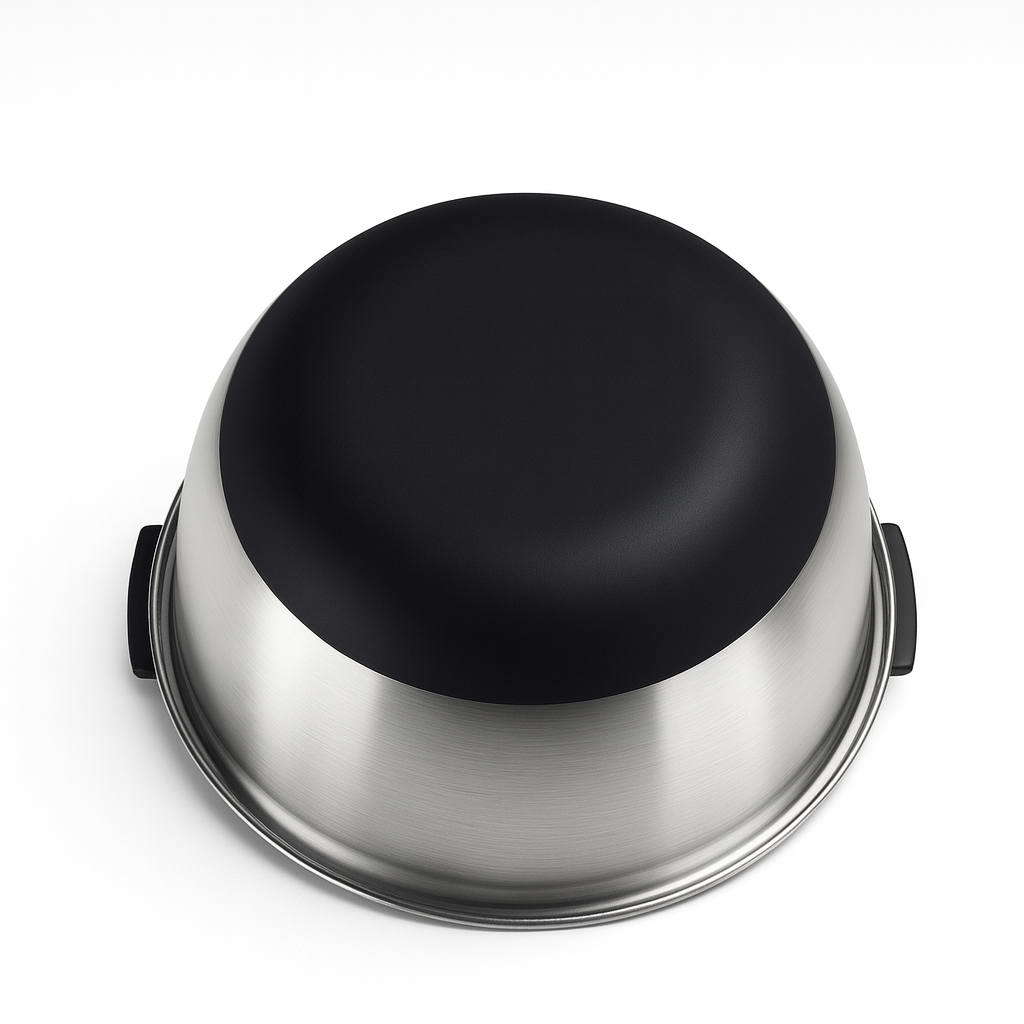
The silicone ring on the base is doing most of the work here.
Then there are the details. A silicone base keeps the bowl from skating across the counter while you stir, and measuring marks inside the wall save you digging out a jug. Neither is essential. Both are the sort of thing you’re glad to have a month in.
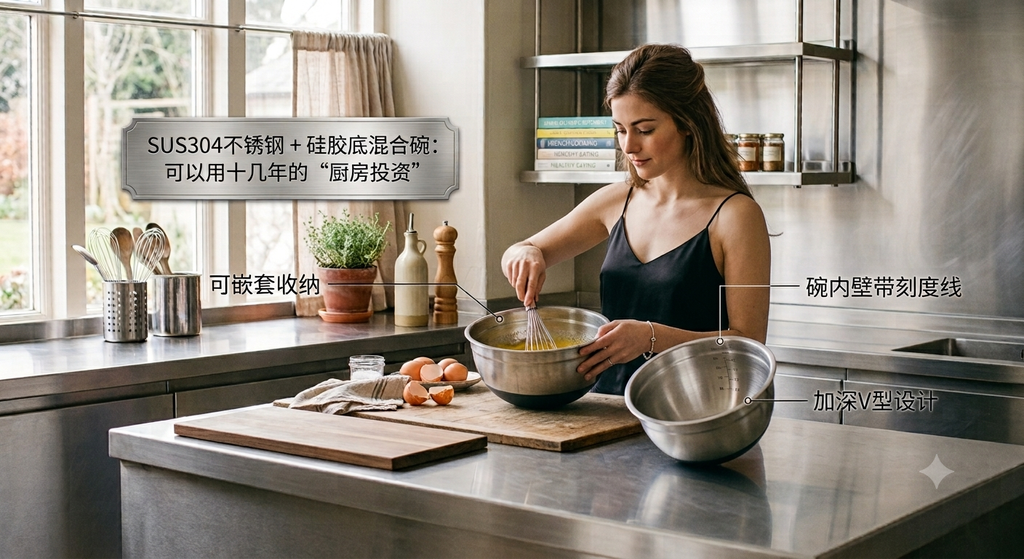
Nestable, marked inside, V-shaped. The small details are what you keep noticing.